
When justice falls silent: why does the Mayer family's fight continue?
Stories of injustice often disappear into archives, court files and forgotten documents. But some survive because there are people who refuse to accept silence.
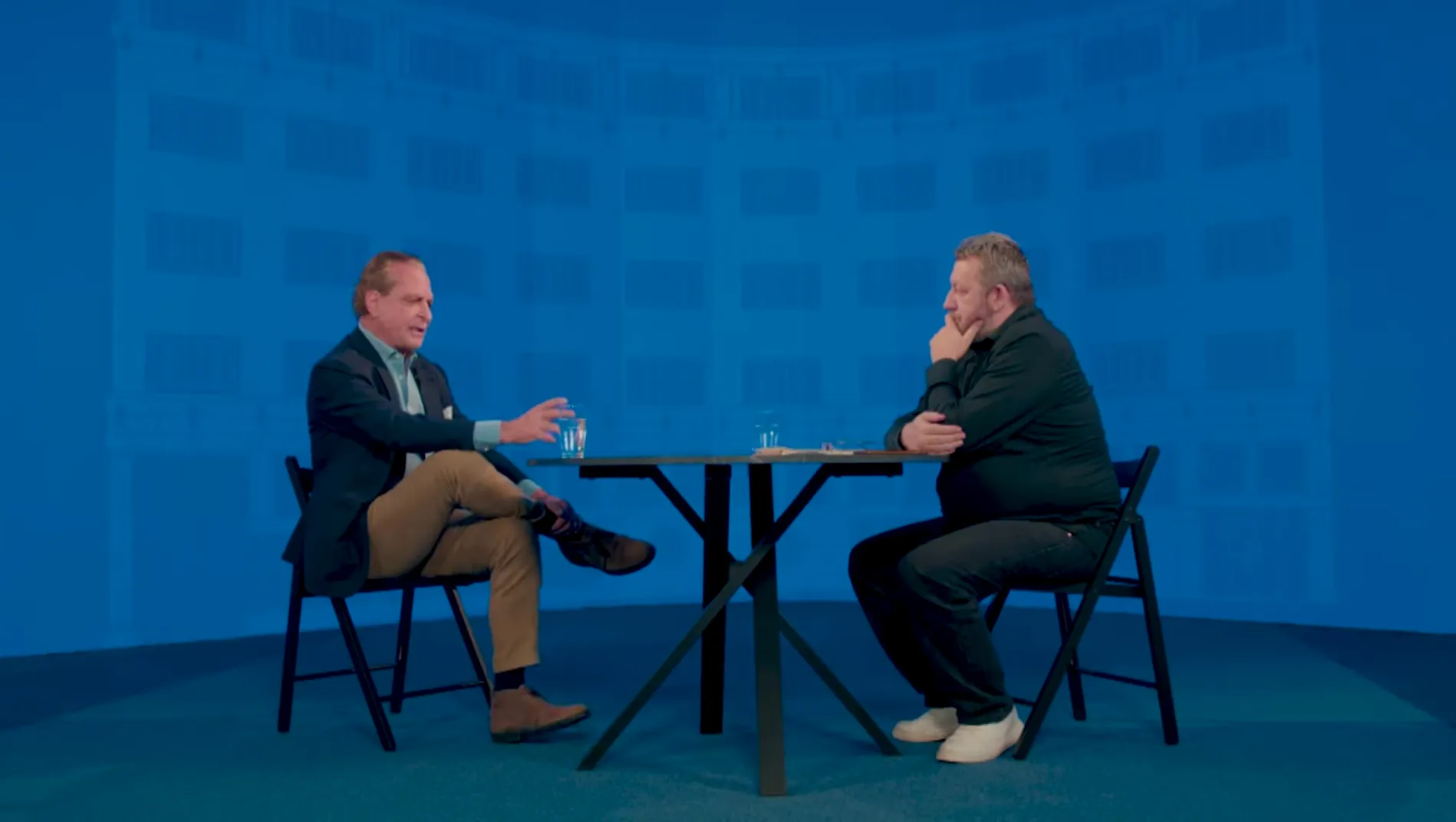
In a new episode of the Hiša pravice project, Federico Pignatelli della Leonessa returns to one of the most difficult questions of Slovenia's transition: is it possible to obtain real justice in a country that is formally democratic if the system still protects those who caused the injustice?
His story is not merely personal. It is the story of the Mayer family, the confiscation of property after the Second World War, the long struggle to recover ownership and the new disputes that also arose in independent Slovenia.
A history that does not disappear
To understand today's dispute, we must look to the past.
After the Second World War, the communist authorities in Slovenia carried out an extensive process of property confiscation. This often took place through administrative measures, without individual court proceedings and without effective legal protection for the owners affected.
The Mayer family was among the victims of these confiscations, losing its property on Wolfova Street in central Ljubljana.
For the family, this meant more than losing a building. It meant losing a home, family memories and security. For generations of the Mayer family, the story began with violence, exile and a long silence.
The long road to justice
After Slovenia gained independence, an opportunity arose to redress injustices from the post-war period. Through denationalisation proceedings, some heirs succeeded in recovering property that had been confiscated from their families.
Yet the return of property did not always mean real justice.
For the Mayer family, too, recovering the building proved to be only the beginning of further complications. Complex legal relationships, the legacy of the socialist system and lengthy court proceedings created a situation in which justice remained out of reach.
A new wound in an independent country
In the conversation, Federico Pignatelli draws attention to a new chapter in this story: a dispute with lawyer Tjaša Andree Prosenc, who, according to him, allegedly acquired part of the property in the building on Wolfova Street unlawfully.
He alleges that this was a case of deception at the very moment when the family was trying to regain control of its property.
Pignatelli stresses that the greatest problem is the response of the institutions. Instead of clearly protecting property rights, the system has allegedly operated slowly and ineffectively, which in his view allows injustices to continue for decades.
Why the Hiša pravice project was created
It was precisely these experiences that led to the creation of the Hiša pravice project.
Its purpose is not merely to tell a family story, but to expose a wider problem: how the legal system in a democratic country can sometimes fail precisely where it should be strongest.
The project therefore seeks to open a public discussion about:
- redressing post-war injustices,
- protecting property rights,
- the functioning of the justice system,
- and the responsibility of institutions towards individuals.
More than a family story
Federico Pignatelli emphasises that his struggle is not only about his family's property.
It is a matter of principle.
If a state cannot protect an individual's fundamental rights, the right to property, the right to a fair hearing and the right to the truth, then trust in the entire system is at risk.
That is why the Hiša pravice project aims to turn one specific story into a broader symbol.
A symbol of the fight for justice.
Wolfova 1 as a symbol of the future
Today, the building at Wolfova Street 1 is more than an architectural feature of Ljubljana.
It has become a symbol of something greater: the question of whether a society can redress past injustices and prevent new ones.
Federico Pignatelli believes that an answer is still possible. But only if these stories are discussed publicly and without fear.
The Hiša pravice project is therefore an invitation to the public: to look at the past, understand the present and help create a future in which justice is no longer merely a promise, but a reality.