
The unbroken thread: the Bled lace factory and the fate of the Mayer family
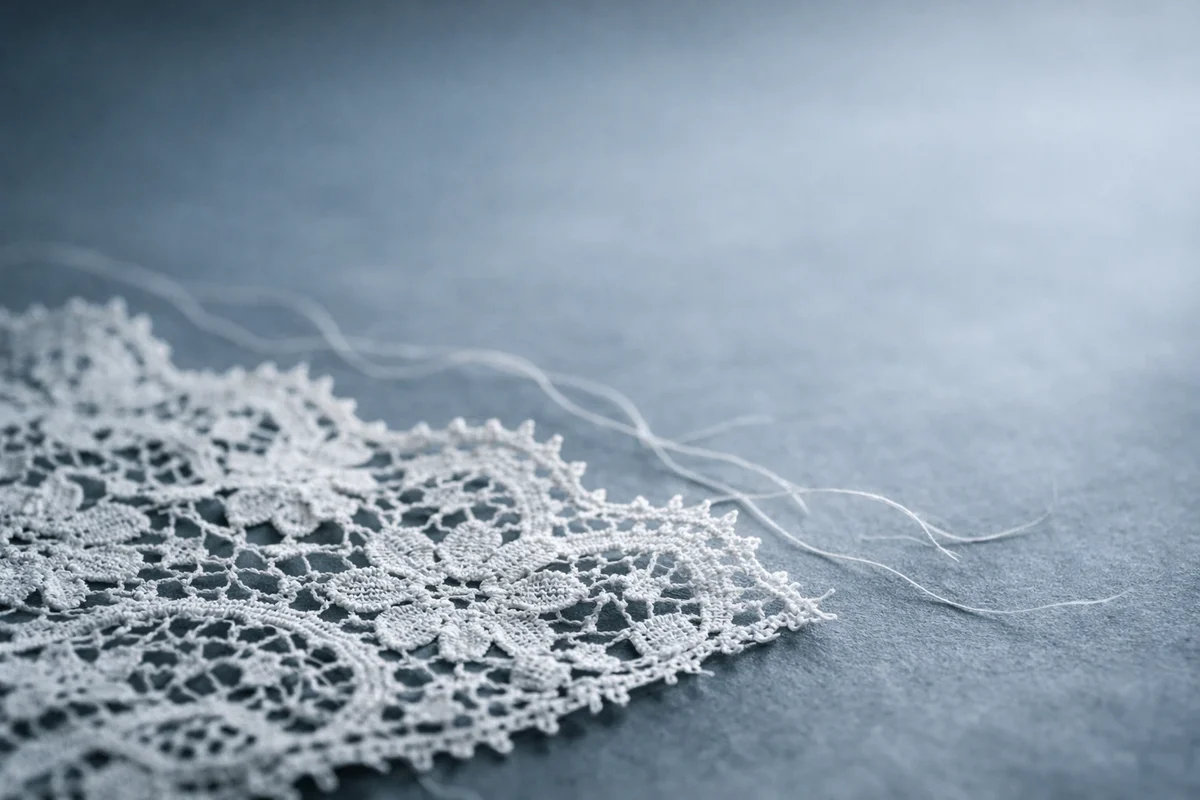
Today, the timber building of the Vezenine Bled Intergenerational Centre stands in Seliše, Bled. Its façade is no coincidence: the perforations contain an abstract lace pattern, a tribute to the factory that operated here for eight decades. Yet behind the orderly account of industrial heritage lies a more difficult story: that of the man who owned the factory and the family whose loss of it marked their lives forever.
This article is part of the work of the Hiša pravice platform, which brings to light the injustices involving the Mayer family. These efforts are now led by Emerik's grandson, entrepreneur Federico Pignatelli. The Bled factory is just one of these cases.
How the lace industry came to Bled
As the Kamra digital collection recounts, drawing on material from the Gorenjska Museum, Bled's tradition of machine-made lace dates back to 1924, when the Ljubljana branch of Jadranska banka established the Slovenian and Swiss Embroidery Works. In 1929, another factory, Jugo-Rhomberg & Co, was established alongside it in response to strong demand for lace. Two factories in the same industry thus developed side by side in Bled.
Emerik Mayer and the Mayer & Co factory
In 1939, Ljubljana wholesaler Emerik Mayer bought Jugo-Rhomberg and renamed it Mayer & Co. He came from an established Ljubljana business family and cared about the local community and the people who worked for him. He was Federico Pignatelli's grandfather. His ownership is also recorded in material from the Gorenjska Museum and Bled municipal records.
The war years and Emerik Mayer's actions
Family and biographical sources describe Mayer's actions during the war, emphasising that he helped the Partisans and their families. This is supported by the testimony of Nada Čadež, the daughter of a former Vezenine worker. During the war, her mother was imprisoned by the Gestapo in Jesenice. Mayer intervened and secured her release by arguing that the factory could not operate without her. Nada Čadež published the story in the book Zgodbe iz Vezenin (Stories from Vezenine), issued by Ljudska univerza Radovljica in 2024 with a foreword by the mayor of Bled, and has recently also shared it on Hiša pravice. Its inclusion in a public municipal publication gives it particular weight.
1946: confiscation built on injustice
The end of the war did not bring Emerik Mayer safety; quite the opposite. In 1946, according to material from the Gorenjska Museum, Mayer's factory and all its assets were confiscated, while the older Embroidery Works was nationalised. Confiscation was not merely an economic measure: at that time, it was generally an additional punishment imposed in post-war criminal proceedings. This is where the core of the injustice lies.
Despite witnesses who spoke in his defence, the communist authorities imprisoned Mayer, tortured him and killed him in Pohorje. A man who had helped the Partisans during the war and saved his workers was convicted and stripped of his property on grounds that the family and witnesses describe as unjust and based on false accusations. The confiscation itself is clearly documented in the museum catalogue and in Zgodbe iz Vezenin. What is disputed is not the fact of the confiscation, but the grounds on which it was carried out.
Mayer's daughter Doris even appealed to Tito in Belgrade for her father's release. She, her mother, her brother and her sister were also imprisoned. After their release, they left Slovenia across the Karavanke mountains in the cold and scattered across the world, while their property remained confiscated. Emerik Mayer's story is recorded in the book Kalvarija gospoda Emerika Mayerja and in the Italian biography of his daughter, Le Ali di una Principessa, by Francesco Del Vecchio.
Doris Mayer: from Bled to Rome
Doris Mayer, born in Bled in 1926, arrived in Italy after her exile and won the title of Miss Capri. She married Prince Giovanni Pignatelli della Leonessa, and they had two sons, Luigi and Federico. She also became known as a film actress, appearing in Fellini's La Dolce Vita.
From a state-owned factory to the present day
While the family scattered around the world, the factory began a new life under state ownership. In 1947, the Jesenice District People's Committee merged the two factories to establish the Bled Lace and Embroidery Factory, later known as Vezenine Bled. For decades, it was regarded as Yugoslavia's leading manufacturer of machine embroidery. Following privatisation in the 1990s, the company went into liquidation in 2004. Today, the Vezenine Bled Intergenerational Centre stands on the factory site, while its timber façade and the Gorenjska Museum's collection preserve its memory. Less visible is what began with the confiscation in 1946 and remains unresolved to this day.
An unresolved thread
Some of the former property was eventually returned to the descendants, but the Bled factory was not. Because the company was privatised and subsequently liquidated, and its assets no longer exist in their original form, restitution in kind has become virtually impossible.
Federico Pignatelli stresses that the factory's denationalisation file has been missing since the period when the family's then legal representative, lawyer Tjaša Andrée Prosenc, was handling the case. When another lawyer later took over the representation and examined the archives, the file could not be found. Where, when and how it disappeared remain unexplained. The family is therefore demanding a clear answer from the competent authorities: does the file exist, where is it, and who had access to it?
That is precisely the purpose of this article: to reopen the question of the Bled factory's denationalisation and the missing file. The story is not over. If any readers remember Emerik Mayer, his factory or the days when embroidery machines hummed in Bled, every such memory is valuable. It is from testimonies like these, piece by piece, that we can assemble what official files cannot tell in full.
Sources
- Gorenjska Museum / Kamra, Vezenine Bled digital collection (establishment in 1924, Jugo-Rhomberg in 1929, Mayer's purchase in 1939, nationalisation and confiscation in 1946, establishment of the Bled Lace and Embroidery Factory in 1947): kamra.si
- Municipality of Bled / MojaObčina.si, article Vezenine Bled, naša dediščina, naš ponos (Vezenine Bled, our heritage, our pride; chronology from 1924 to 2004, new owner in 1992, liquidation in 2004): mojaobcina.si
- Vezenine Bled Intergenerational Centre, About us / Vezenine Bled past and present (the period from 1924 to 2004, the Gorenjska Museum exhibition, the Seliše location): mgc-bled.si
- Municipality of Bled, presentation of the Vezenine Bled Intergenerational Centre (municipal ownership, the centre's activities): bled.si
- Reporter, article Morali bi ga osvoboditi, ker je pomagal Slovencem, a so ga ubili, ker je bil bogat (They should have freed him because he helped Slovenians, but they killed him because he was rich; the fate of Emerik Mayer and his family, Doris Mayer and Pignatelli, the books Kalvarija gospoda Emerika Mayerja and Le Ali di una Principessa): reporter.si
- Zgodbe iz Vezenin: stoletne nitke (Stories from Vezenine: a century of threads), published by Ljudska univerza Radovljica, 2024 (the timeline records Mayer's purchase in 1939 and the confiscation in 1946, based on the museum catalogue; it also includes Nada Čadež's testimony about Mayer's intervention to secure a worker's release from the Gestapo in Jesenice): mgc-bled.si
Note: the factory's industrial history draws on material from the Gorenjska Museum and records of the Municipality of Bled and is well documented. Information about the fate of the Mayer family comes from media and biographical sources and family testimonies, and is identified as such. Nada Čadež's testimony about Mayer's intervention to secure her mother's release is published in the municipal publication Zgodbe iz Vezenin (2024). Individual personal testimonies are historical memories, not evidence established in court.