
From success to confiscation: the story of the Mayer family and the beginning of the fight for justice
In the center of Ljubljana stands a building that at first glance reveals nothing special. But behind its walls hides a story of success, injustice, greed, and a long fight for justice. It is the building at Wolfova ulica 1, a place that mirrors the dramatic fate of the Mayer family.
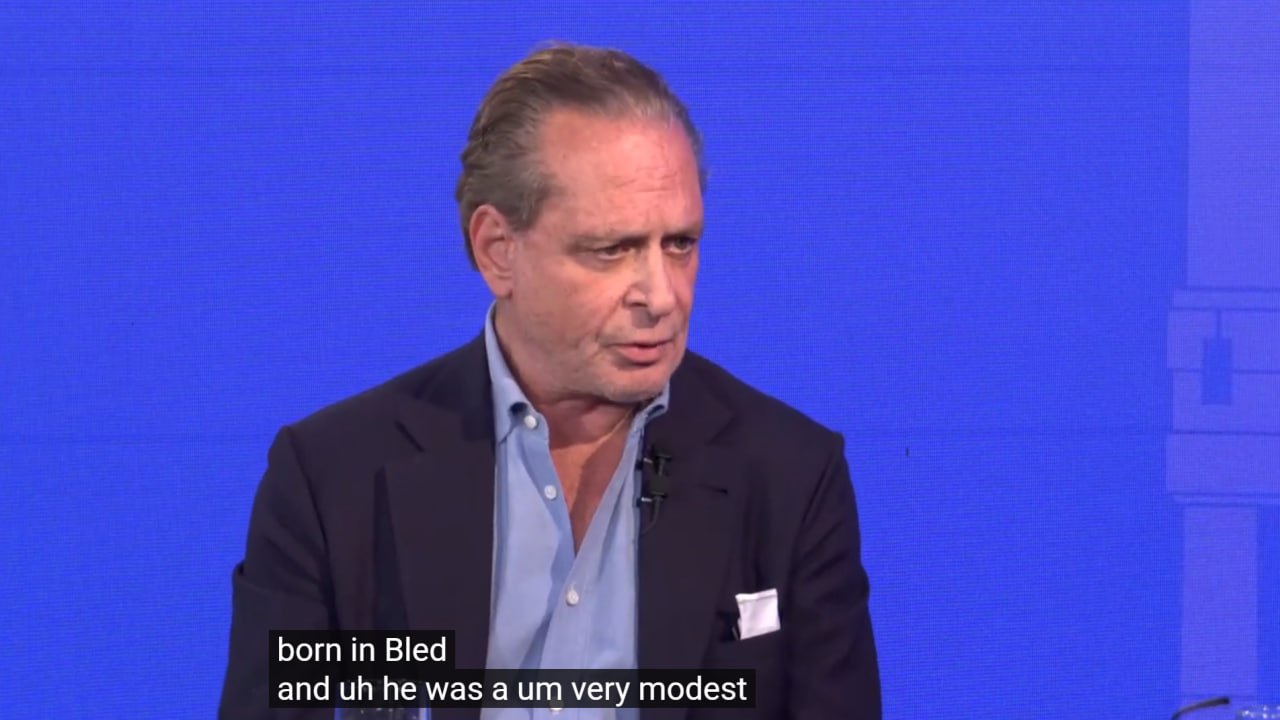
In the first episode of the House of Justice podcast, Federico Pignatelli della Leonessa, grandson of Emerik Mayer and current owner of the property, tells his personal and family story. His account is not merely a family memoir. It is the revelation of a historical injustice that has still not been corrected, and at the same time the beginning of a project that aims to encourage a broader discussion about justice, responsibility, and the state of the rule of law in Slovenia.
A symbol of success in pre-war Ljubljana
Before World War II, the Mayer family was one of the successful bourgeois families in Ljubljana. Entrepreneurship, hard work, and ambition enabled them to participate in the development of the capital at a time when the city was experiencing economic and cultural flourishing.
During this period, the building at Wolfova ulica 1 was also constructed. It was not merely a property — it was a symbol of family success, stability, and a vision for the future.
But history soon brought a dramatic turning point.
War, helping people, and the tragic irony of history
During World War II, Emerik Mayer helped people in distress. According to testimonies, he also helped families of partisans and shielded them from the occupier. Because of this, he never considered leaving his homeland at the end of the war.
He believed he had acted rightly.
But it was precisely this decision that became tragic.
After the war, the new communist authorities began extensive property confiscations. Under the pretext of punishing alleged enemies of the system, numerous families were stripped of their property without any judicial protection.
Among them was the Mayer family.
Confiscation, violence, and the family's exile
Emerik Mayer became a victim of post-war violence. He was imprisoned, tortured, and killed, while his family was driven out of Slovenia. Their property was confiscated without a fair judicial process.
Archival documents today clearly show that confiscations were often planned in advance. Officials simply selected the properties they wanted for themselves and then found administrative reasons for their seizure.
On the list of such properties was also the building at Wolfova ulica 1, the home of the Mayer family.
This event became the original sin of this building's story.
The long road to restitution and a new injustice
After Slovenia's independence, the state attempted to correct some post-war injustices through denationalization. The property at Wolfova ulica 1 was returned to the heirs of the Mayer family.
But the return did not mean true justice.
The house was returned together with non-profit rental agreements that had been established during socialism. Ownership was formally restored, but the actual right to manage and use the building remained severely limited.
Even worse, the story became entangled in a new tragedy.
One of the tenants in the building was attorney Tjaša Andree Prosenc, who, according to Federico Pignatelli, exploited her position and defrauded his mother Doris Mayer. According to his claims, she illegally appropriated an apartment and commercial space in the building.
Doris Mayer died with the feeling that her homeland had betrayed her twice — first after the war, when the family was exiled, and then in independent Slovenia, when the judicial system failed to protect her rights.
Wolfova 1 as a symbol of a broader problem
The case of Wolfova 1 is not merely a family story.
In Federico Pignatelli's view, it reveals a broader problem of the Slovenian transition. Denationalization often formally recognized property rights but did not always enable actual and comprehensive restitution.
The consequences are prolonged legal disputes, complicated ownership relations, and a feeling that justice for many victims of post-war injustices was never fully achieved.
The House of Justice project
This is why Federico Pignatelli launched the House of Justice project.
His goal is not merely to resolve a family dispute. The project aims to expose irregularities, draw attention to cases of injustice, and encourage discussion about the functioning of the judicial system.
The building at Wolfova ulica 1 is thus meant to take on a new symbolic role.
From a symbol of injustice, it is to become a symbol of the fight for justice.
A fight that goes beyond one family
Federico Pignatelli emphasizes that his fight is not intended solely to correct the injustices that happened to his family. It is a broader fight — for everyone in Slovenia who has found themselves in a similar position and who, due to corruption or systemic shortcomings, has been left without justice.
The story of Wolfova 1 therefore poses an important question:
Will Slovenia continue to allow past injustices to remain uncorrected, or will it finally establish a system in which justice truly prevails?
The House of Justice project seeks to help find the answer.