
A bank you cannot trust: how UniCredit left Wolfova 1
Wolfova 1, Ljubljana · The tenancy
UniCredit has stopped paying rent, disputes the validity of the lease and, on top of that, is resisting a court eviction order. It left its respected, denationalised premises in the very centre of Ljubljana in a condition that an expert appointed by the court had to record.
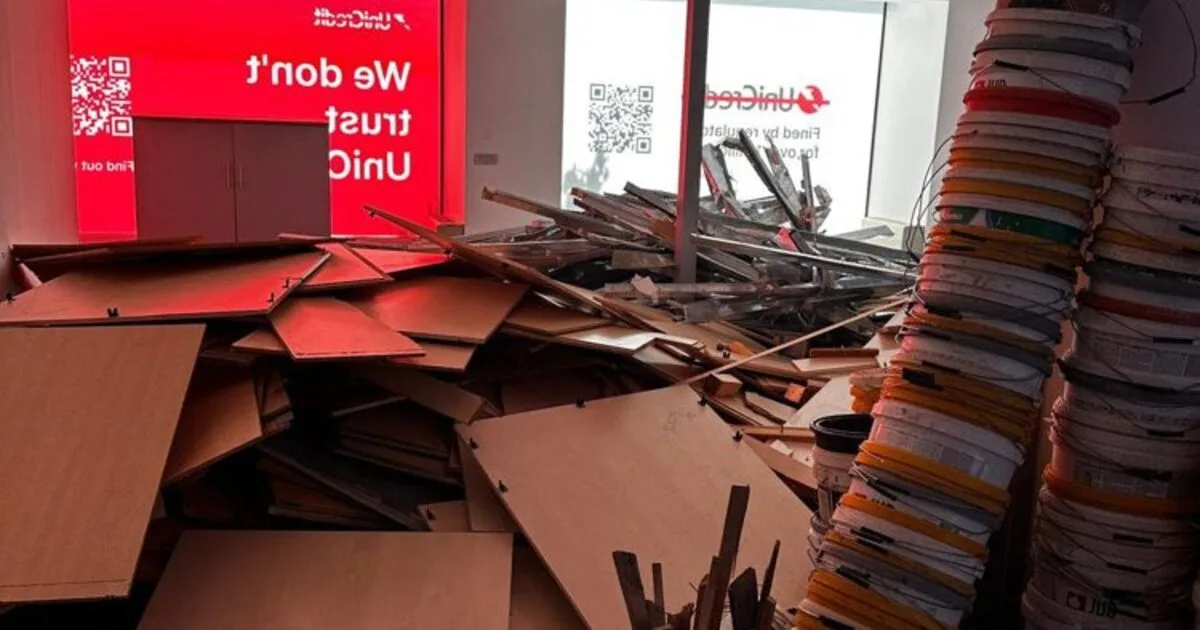
In banking, trust matters most. Yet Federico Pignatelli, a financial expert of international standing, has written plainly on the façade of his building in the centre of Ljubljana that UniCredit cannot be trusted. He has plenty of arguments for that claim. When you see what the bank made of one of the most prestigious business premises in the city, you really do ask yourself: how can anyone trust such a bank?
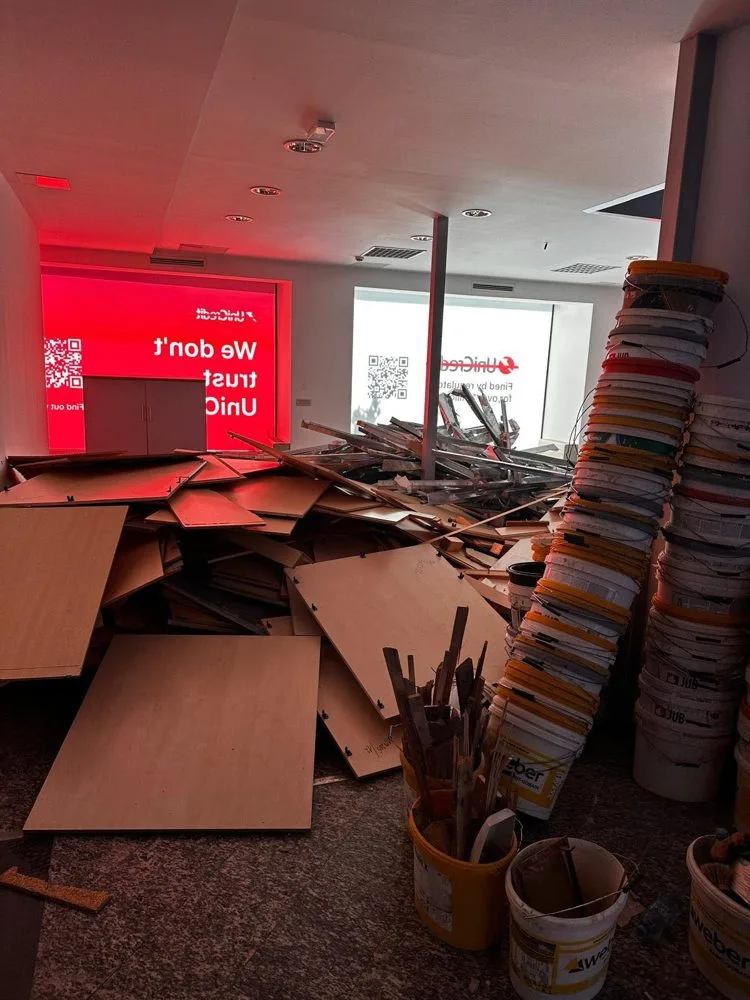
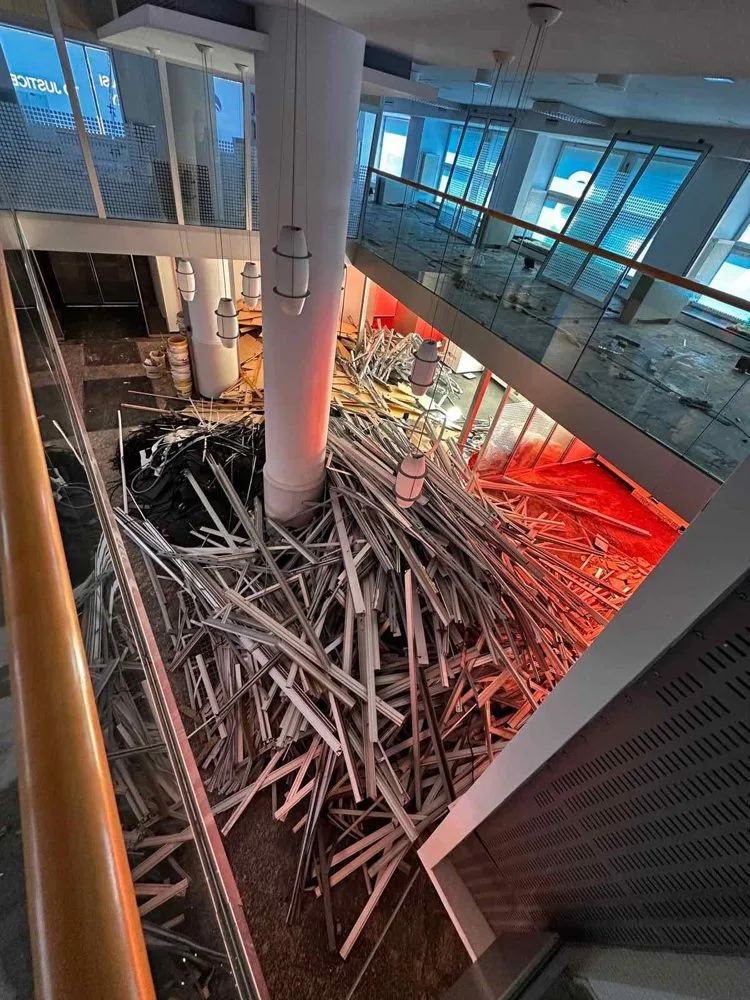
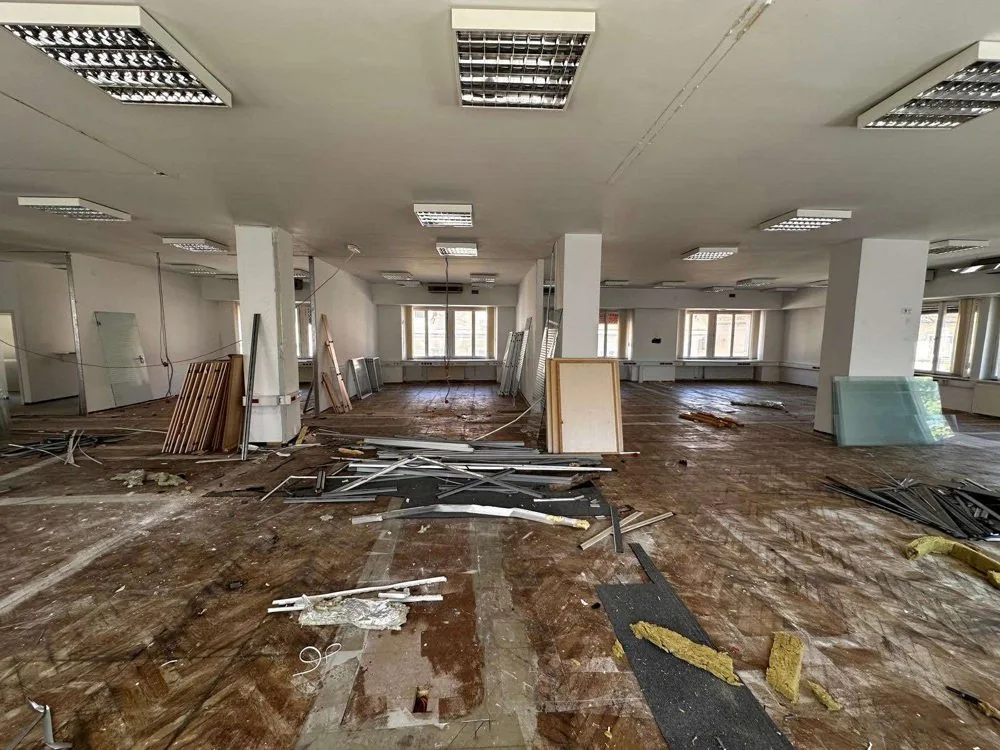
The address is one of the most prestigious in the country. Wolfova 1, a few steps from the Triple Bridge and Prešeren Square, is regarded as one of the most representative business locations in Ljubljana. Today the interior of the building looks wretched: dismantled partition walls, torn-out insulation, floors stripped down to the joists and heaps of dismantled material piled up on the upper floors. This is the picture of premises that the tenant, UniCredit, left behind after many years.
The photographs show the premises in a state of demolition. What happened with the tenancy, and why the dispute between the landlord and one of the largest banks in the country is now being fought in court, is explained by a review of the open proceedings prepared by the company Eurocapital Partners Estate.
Premises left empty despite a lease running to 2028
The tenancy between Eurocapital Partners Estate as landlord and UniCredit Banka Slovenija as tenant was based on a lease dated 3 August 2020. By an annex dated 16 June 2023, the contract was extended all the way to 30 September 2028. Under the contract, the bank would therefore have used the premises at Wolfova 1 (and paid rent for them) until 2028.
UniCredit, however, says it terminated the tenancy, claiming that the contract ceased to be valid on 21 October 2024 and that from that day on it is no longer obliged to pay rent. Eurocapital firmly rejects this reading: it maintains that the termination was invalid and that the lease remained in force throughout. Which interpretation is correct will have to be decided by the court.
The claim: almost a quarter of a million euros in unpaid rent
Eurocapital is demanding that UniCredit pay 242,168.58 euros in unpaid rent for the period from 1 November 2024 to 31 May 2025, together with statutory default interest. The procedure began with enforcement on the basis of an authentic document. After the bank lodged an objection, it is now continuing as regular civil litigation before the District Court in Ljubljana.
Eurocapital announces that it will expand the claim further. In addition to the rent for the stated period, it intends to seek payment of rent for the days from 21 to 31 October 2024, as well as rent or compensation for the use of the premises after 31 May 2025. To this it adds the unpaid operating costs from 21 October 2024 onward and, probably most telling for the reader, the cost of clearing the premises and restoring them to their original condition, including the supply and installation of new parquet and the replacement of the windows.
A court expert records the state you see in the photographs
In order to actually document the current state of the premises, Eurocapital initiated proceedings for the preservation of evidence before the Local Court in Ljubljana and proposed the appointment of a court expert in the construction or real-estate field. Despite UniCredit's opposition, the court granted the proposal by a ruling dated 11 November 2025.
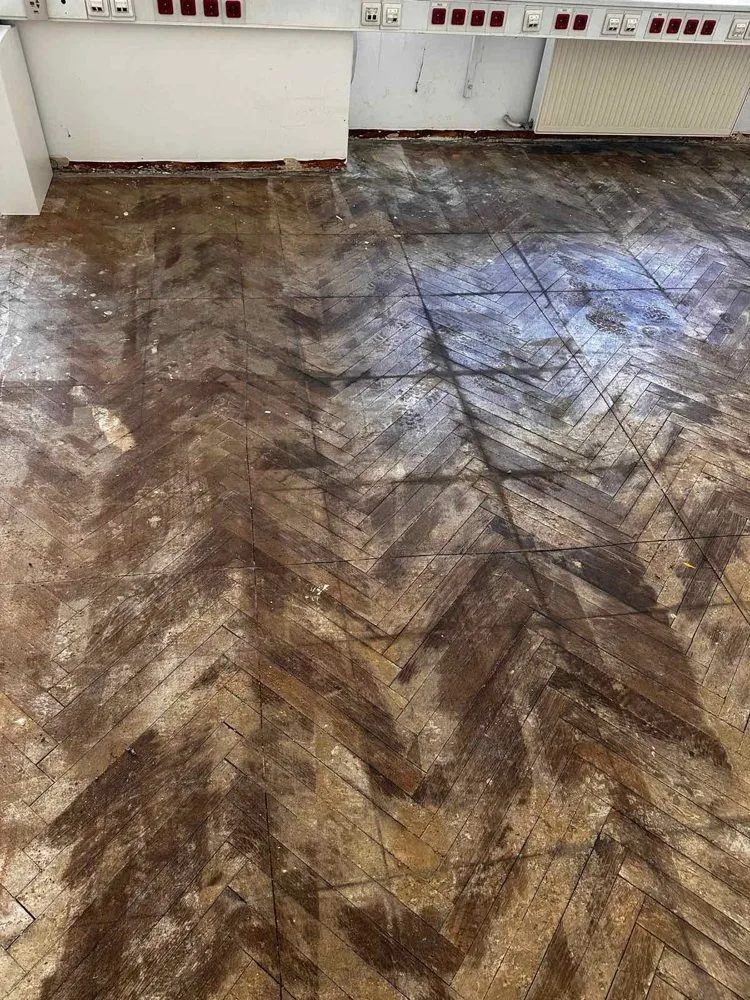
The expert then inspected the premises several times, recorded, photographed and filmed them, and produced an expert opinion dated 18 March 2026. Because, in the landlord's view, the expert did not answer some key questions, among them whether the original parquet can be restored and whether the windows can be repaired, Eurocapital proposed that the court order the expert to supplement the opinion in writing. The parties are still waiting for the court's decision.
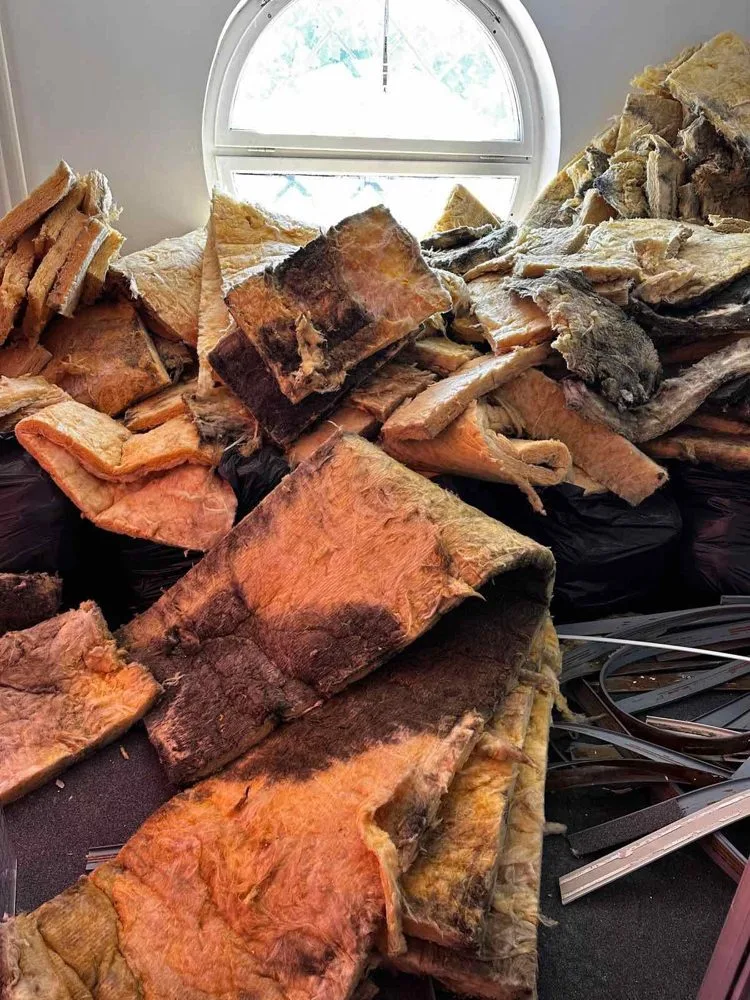
The question of the parquet and the windows is not trivial: these are historic elements of a distinguished building. The owner's photographs show floors stripped to the substrate in places, torn-out mineral insulation and dismantled features of the rooms.
The eviction order and the bank's objection
A third set of proceedings is running in parallel. Before the District Court in Ljubljana, Eurocapital filed a lawsuit seeking judicial termination of the lease of 3 August 2020 on account of non-payment of rent, together with the clearance and handover of the premises, emptied of all persons, equipment, partition walls, floor coverings and other conversion elements, and returned to the condition in which they were taken over.
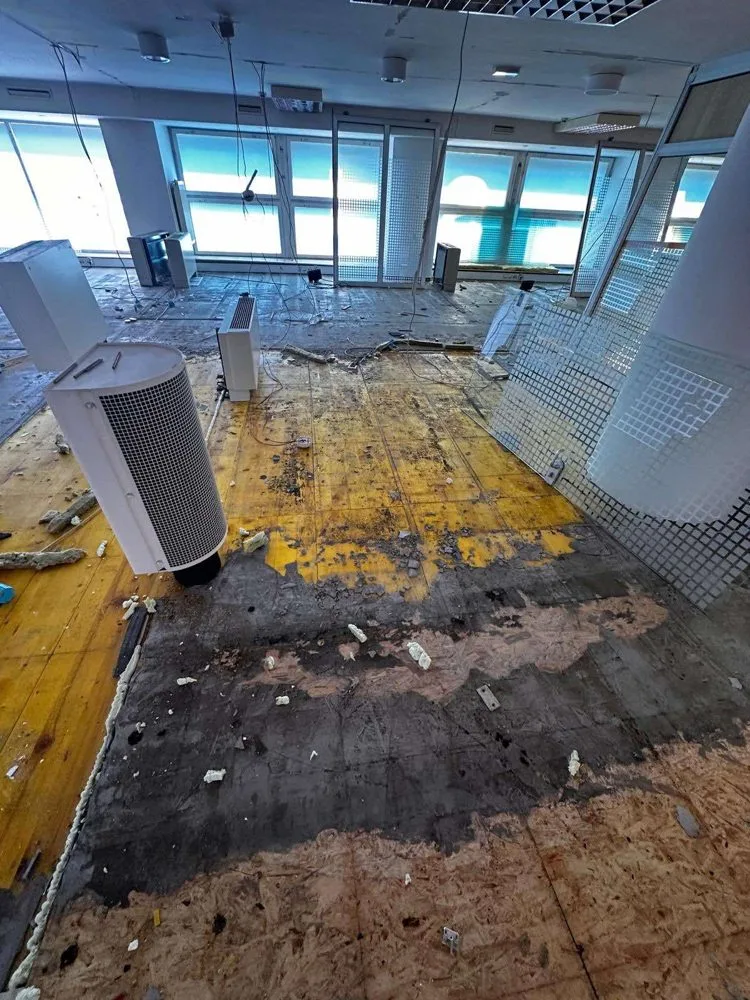
On 9 January 2026 the court issued an eviction ruling ordering UniCredit to vacate the premises. The bank lodged an objection against the ruling, so this procedure too will continue as regular litigation. This means that the final date for the end of the tenancy and the return of the premises will be decided in regular court proceedings.
Background: a denationalised house that was meant to stay in the family
The dispute with UniCredit is only the latest chapter in a longer story about the property at Wolfova 1, a building that, after Slovenia's independence, was returned through denationalisation to the heirs of the former owners, the Mayer family. Part of the ownership was taken over, through Eurocapital Partners Estate, by the entrepreneur Federico Pignatelli, who has for years been working to keep the property in the family's hands and to clear up the questions surrounding the handling of this estate. More extensive documentation on these open questions is available on the website hisapravice.si.
In this context it is not unimportant that the tenancy with the bank goes far back. As early as 2013, the newspaper Delo, in an article titled »Temna plat hiše pri Tromostovju« (The dark side of the house by the Triple Bridge), wrote about the disputed circumstances of how the property was managed, including the lease with UniCredit. According to the claims of the time, the rent, which was supposed to be adjusted for inflation, is said to have remained unchanged for roughly 18 years. The custodian of that contract was the family's long-standing legal representative, attorney Tjaša Andrée Prosenc, of whom Delo stated that for a certain period she is said to have represented the bank itself as well. At the time, the attorney rejected all the accusations as untrue and described them as part of a dispute within the family. The claims about her role relate to this earlier period of management and have been treated separately by the courts and the public. In the current proceedings covered by this review, the parties are the company Eurocapital and the bank UniCredit.
The common denominator of the old and the new story remains the same address, Wolfova 1, and the same impression: that one of the most distinguished properties in the capital was for many years not handled in the way its location and its name would lead one to expect.
What comes next
All three sets of proceedings are moving forward before the Ljubljana courts. They are the proceedings for payment of rent, the proceedings for the preservation of evidence and the proceedings for eviction. UniCredit denies the validity of the termination and its obligations, while Eurocapital insists that the contract remained in force and that the bank must settle the rent and return the premises to their original condition. The court will have the final word. Until then, the photographs from Wolfova 1 remain the most eloquent record of the state in which the tenant left the house by the Triple Bridge.
Source of the information on the proceedings: a review of the open cases of Eurocapital Partners Estate. Historical context: Delo, »Temna plat hiše pri Tromostovju« (2013). Photographs: owner's archive. The statements about the disputed questions are the parties' assertions; no final and binding decision has yet been made on them.